Growth team · Retention · Wallapop · 2025
Buyers didn't trust sellers. We gave them a reason to, and we increased successful payments by 1.1%
00 Context
Wallapop is the leading second-hand marketplace in Spain. While the team had traditionally focused on user activation, our strategic priorities recently shifted towards retention, ensuring users continue engaging with the platform over time
In this case study, we address a key retention challenge: building trust in the platform. At the same time, we also tackle activation, since it is a critical step towards retention.
Users cannot stay engaged if they don’t first successfully start using the product.
01 Problem
The conversion rate of new signup to a successful user* within a 30 day period is only 8%.
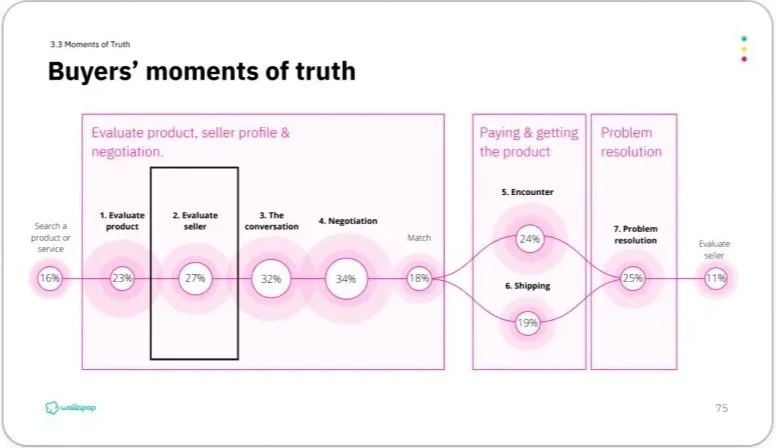
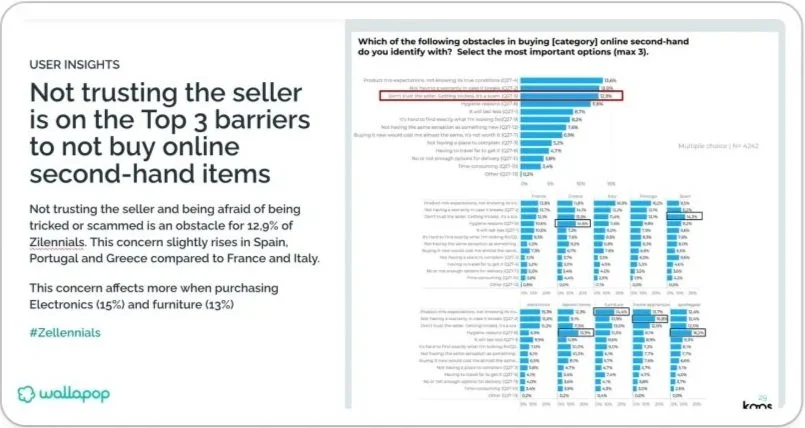
From previous research we know that one of the top reasons contributing to this low conversion rate is the inability to assess other users’ trustworthiness.
*A Successful User is a user that is either a Seller (sells a product with intermediation or marks an item as sold in Wallapop) or a Buyer (buys an item with intermediation or is reviewed as a buyer by a seller)
02 Opportunity
Create a Top Profile badge for sellers on Wallapop who have consistently provided excellent service to buyers.
03 Hypothesis
If we display a Top Profile badge on listings and profile pages for sellers who have proven capable of providing excellent service to buyers,
we will increase conversion rate for new and repeated purchases as well as frequency of listings from sellers
because buyers are able to purchase with more peace of mind and sellers are motivated to earn the badge once they see that it helps with sales.
Impact:
Primary metrics
Successful payments
Click to Purchase intention
Secondary metrics
CvR to Favorites
CvR to Chat
CvR to Make an offer
04 Definition
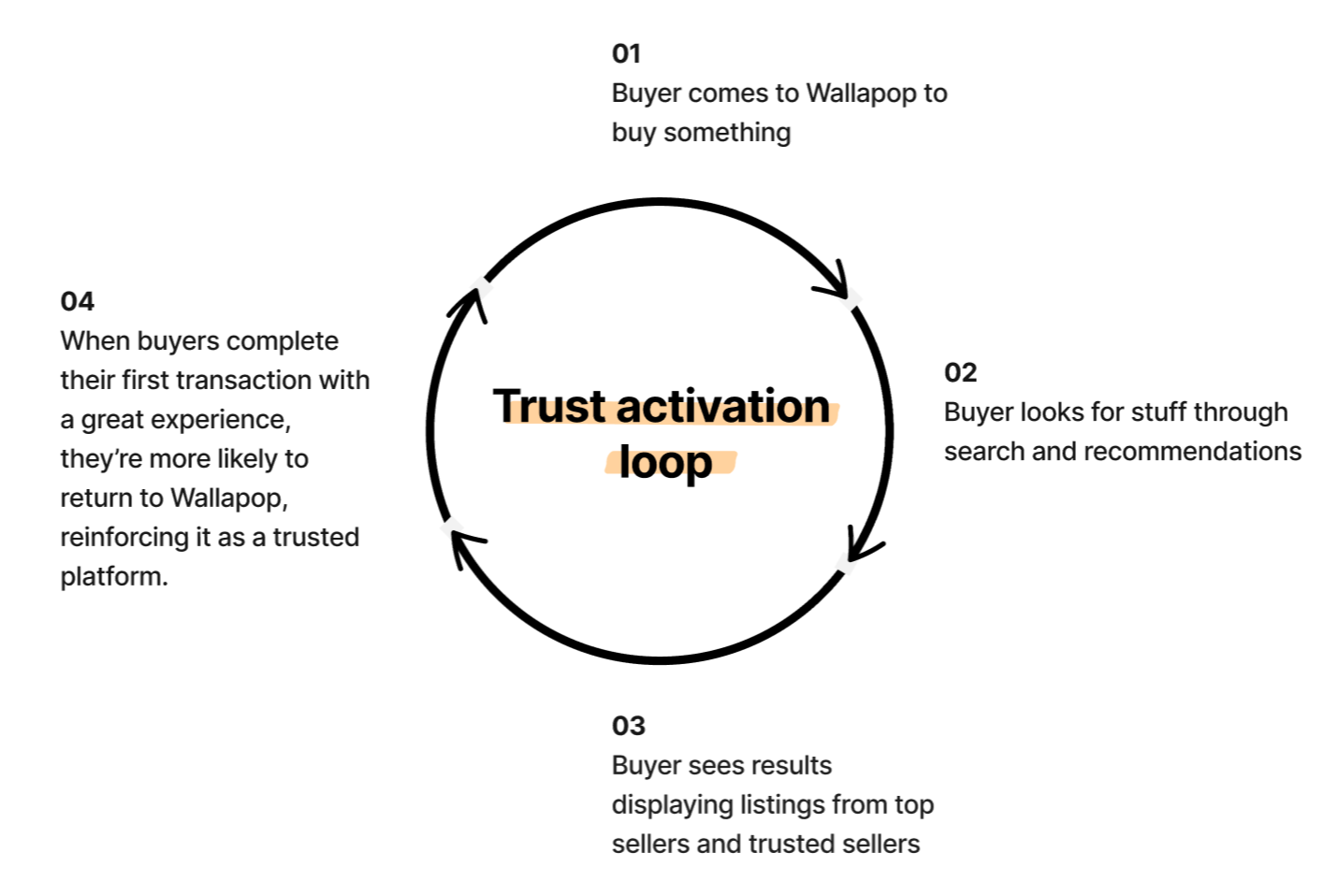
We defined the project using a Trust Activation Loop: improving trust helps users successfully activate, and successful activation drives retention.
Focusing on trust therefore addresses both activation and retention, creating a virtuous cycle of growth.
The goal was to design a trust badge that leverages Authority Bias, signaling to users that these sellers are more trustworthy and competent due to their official recognition. It also taps into Social Proof by highlighting positive experiences from other buyers, increasing the likelihood that new users will trust and purchase from them.
Criteria
Median Time to answer chats from Potential Buyers: users that answer in under 24h in the last 90 days;
Median Time to deliver at prop-off point (for Shipping Transactions): users that take under 48h after Shipping label creation to take the item to the Parcel Shop in the last 90 days;
Dispute ratio: dispute Rate (computed as Successful Dispute towards Buyer divided by Items Sold per seller) under or equal to 2% in the last 12 months;
Report ratio: report Ratio per Item View (compute as Reported Listings divided by total item views) under or equal to 2% in the last 12 months;
Average seller score: average review score provided by buyers of at least 4.75 in the last 12 months;
Number of sales: users with at least 2 successful transactions as sellers in the last 90 days;
Number of listings: users with at least 3 listings published in the last 90 days.
05 Design
Content design: we had several discussions about the Top Profile badge. We aimed for a neutral approach—easier in English but more challenging in Spanish—while also ensuring it wouldn’t be confused with 'Top Seller,' which is more related to stock and inventory.
Cross-team alignment: We encountered an overlap with other teams running an experiment at the same touchpoint simultaneously. To avoid overcrowding and harming the user experience, we had to make a strategic decision. This led to a small redesign to ensure a seamless experience and reduce cognitive load.
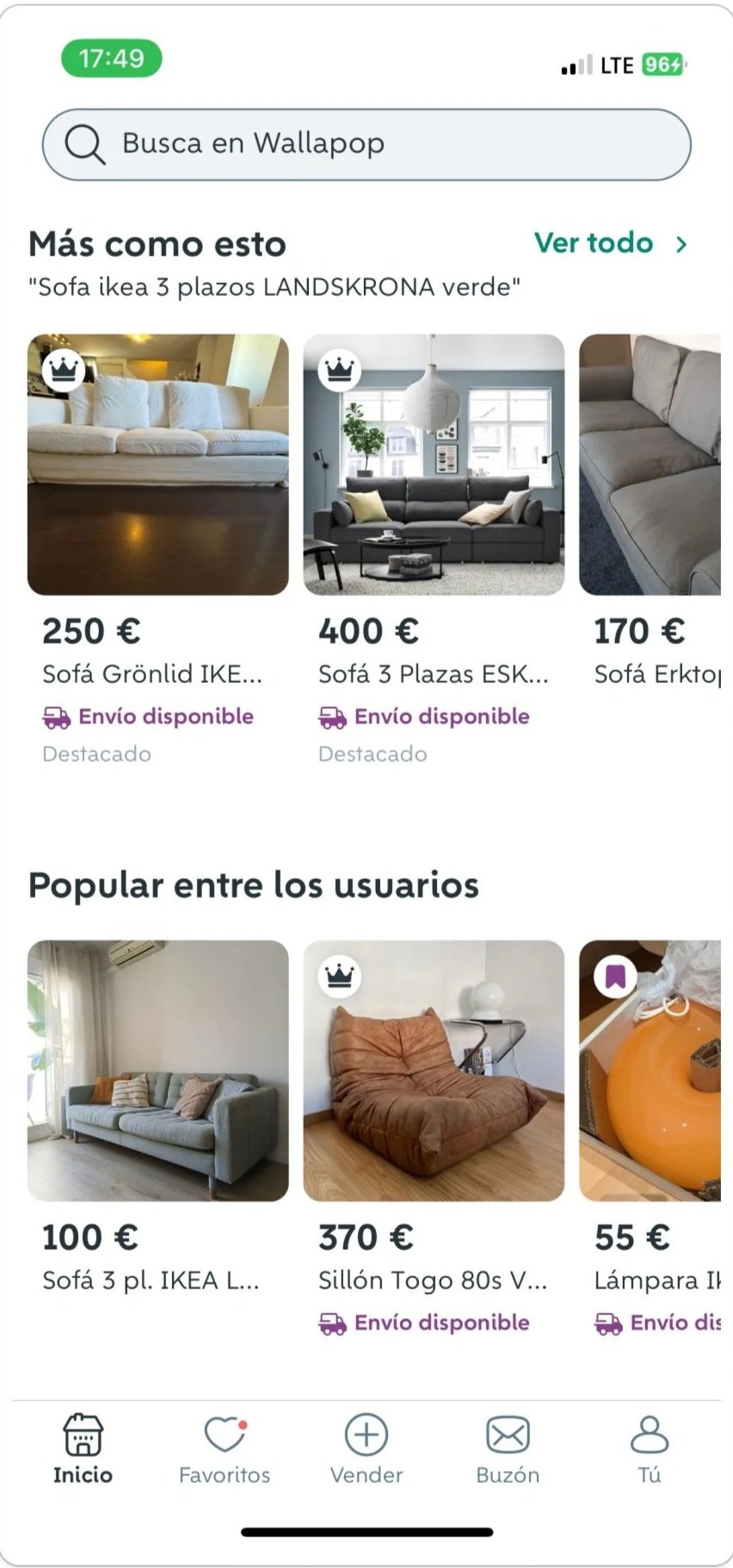
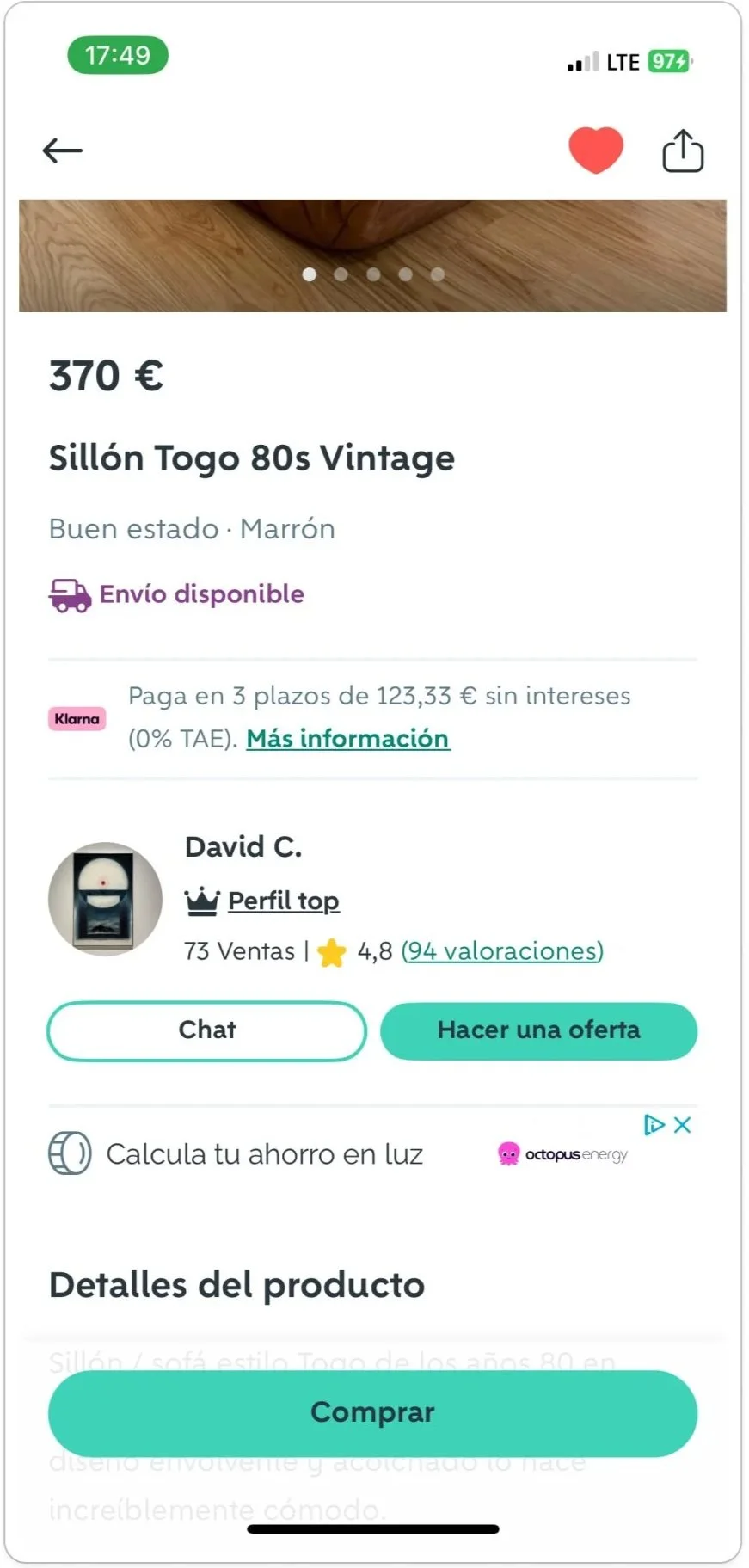
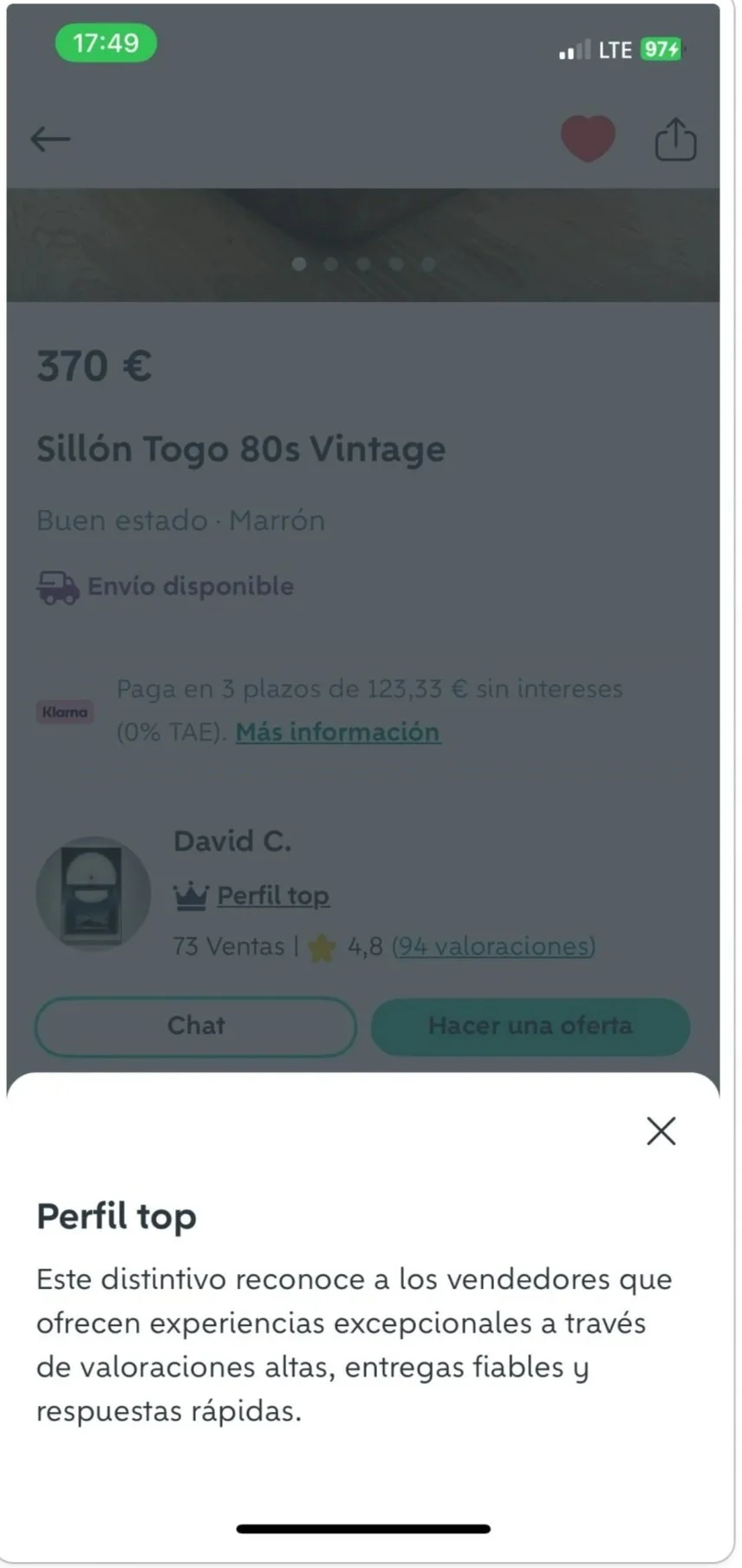
Why these touchpoints? Limiting the badge to the home and search pages would leave buyers unclear about its meaning and criteria, potentially leading to confusion and mistrust. We also created a FAQ page to complement the info provided
06 Go-to-Market
Launch an A/B test in the following touchpoints:
Home
Search
Item detail
Second iteration:
Other touchpoints – Seller profile
07 Results
CVR – Click to PI in Top Profile: -3,18%
Nº PI in items with badge: -3,31%
Nº Total successful payments: +2,11%
We also observed that:
Favorites decreased by -2,73%
Offers decreased by -1,71%
Chats decreased by -2,06%
Final notes
Although we observed a negative impact on some metrics, the badge encouraged more direct purchases (without chats, offers, or adding items to favorites). This indicates that there was no trust barrier, and the badge effectively sped up the buying process.
We decided to roll out.
More projects
-
![]()
UX strategy · UX vision · User Research · Visual
-
![]()
Growth · Behavioural design
-
![]()
Product strategy and WOW’s