Growth team · Retention · Wallapop · 2025
How prompting sellers to adjust prices drove +0,57% growth in overall transactions.
00 Problem
Wallapop is the leading second-hand marketplace in Spain. Yet, our data shows that less than 3% of active inventory is sold per month.
Buyers, however, are highly price-sensitive, with value for money cited as the number one purchase driver.
01 Opportuntity
We can help sellers sell more and sell quicker by leveraging price drops as a motivation to influence buyers.
We can help buyers get a good deal by notifying them when their favorited item has dropped in price.
02 Hypothesis
If we nudge listers to drop prices of their items because it increases their chances to sell. We will increase number of items sold and purchase frequency
Because buyers get notified of the price drops and are more likely to purchase.
03 Impact
Primary metric:
Number of items sold
Secondary metrics:
% of sellers who reduced price
% of buyers who convert from notification received to purchase
04 Definition
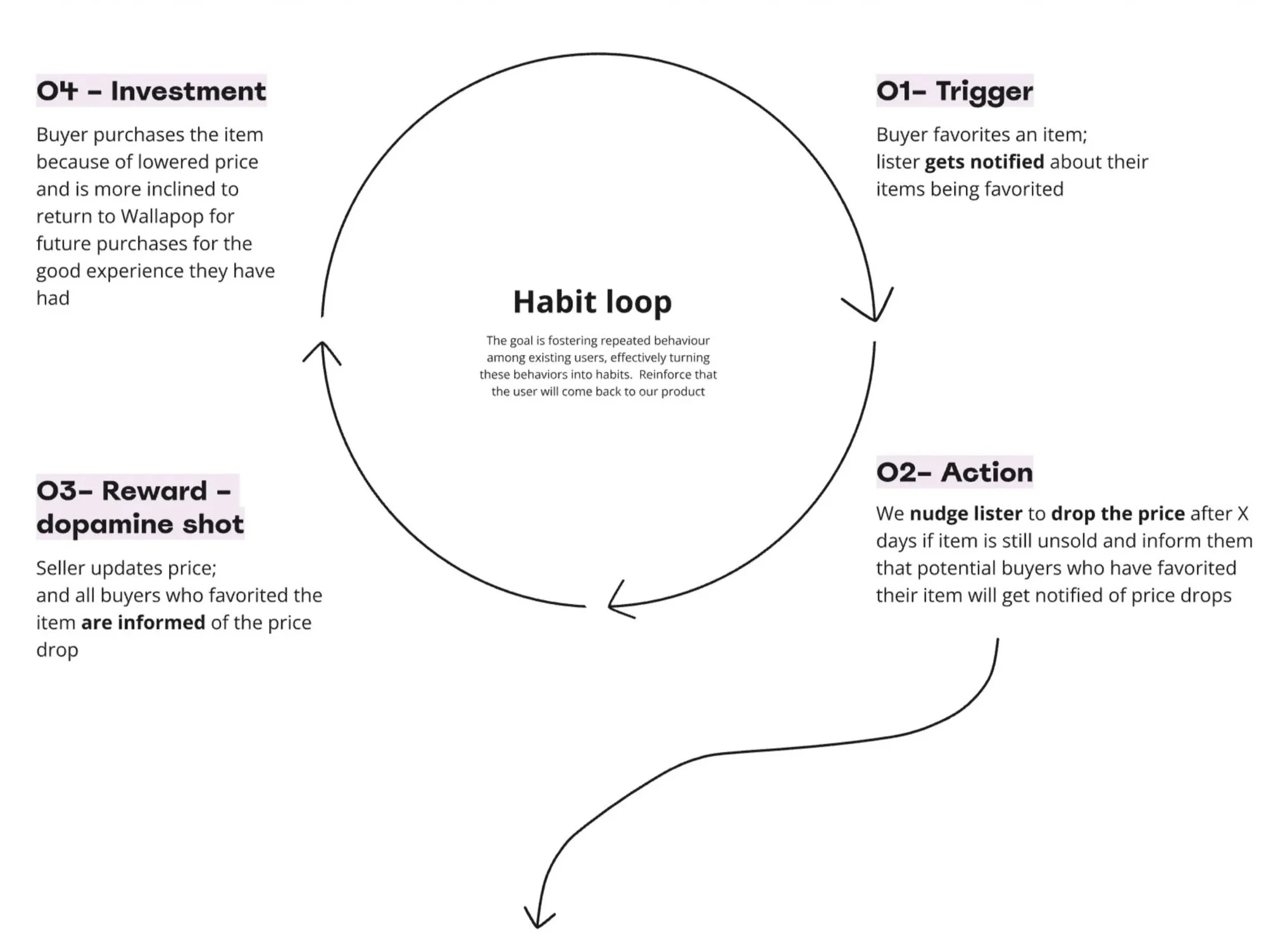
This Habit Loop (Hooker model) is designed to create a virtuous cycle between buyers and sellers.
It starts when a buyer favorites an item, triggering a notification to the seller about the interest. If the item remains unsold after a set period, the seller is nudged to drop the price. When the seller updates the price, all buyers who favorited the item are notified of the reduction.
This incentivizes the buyer to complete the purchase, while also increasing their likelihood of returning to Wallapop for future transactions, creating a sustainable engagement loop.
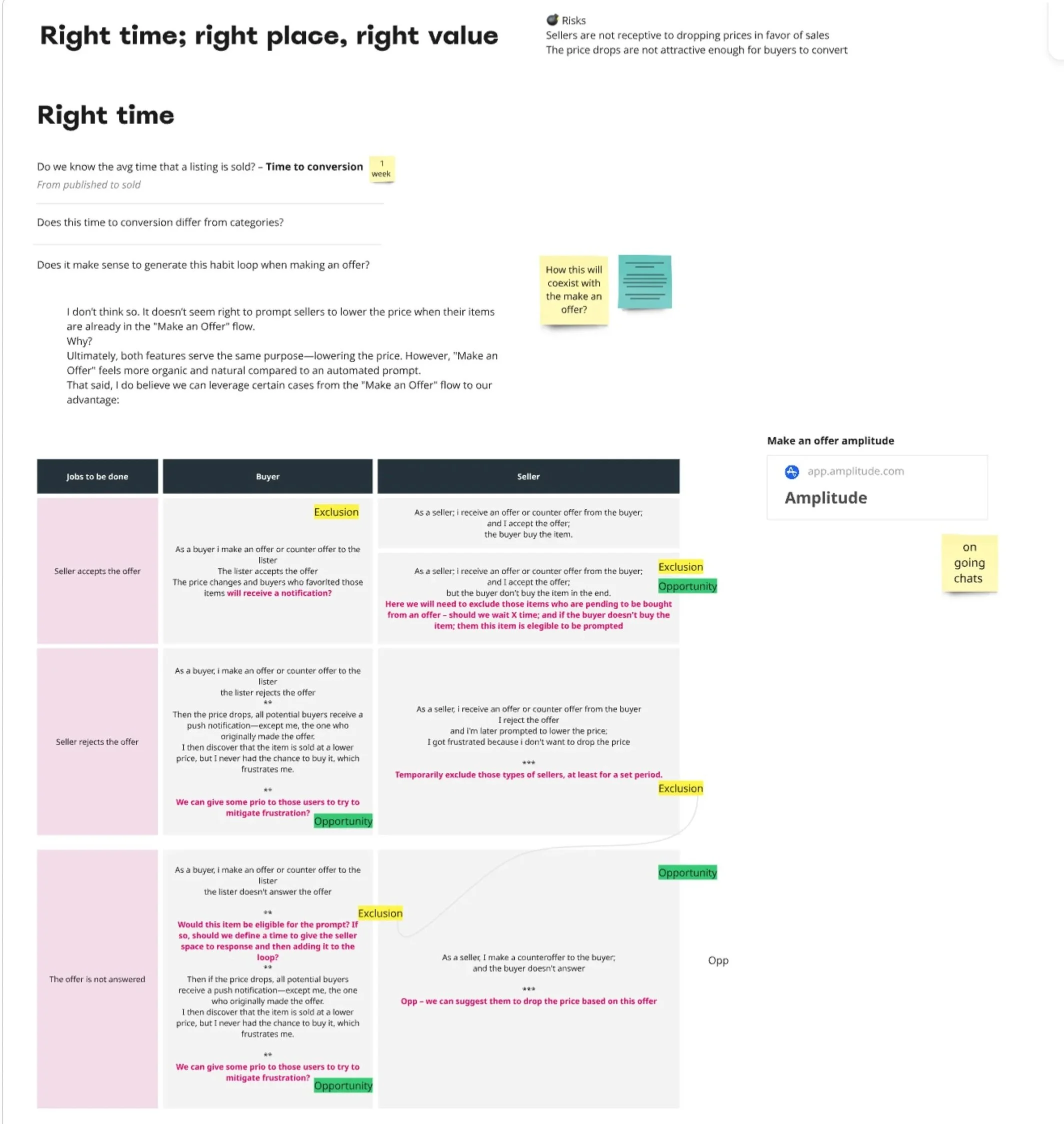
For this initiative, I defined the approach based on the statement of: Right time, right place, right value. The idea is to deliver the right intervention at the moment it matters most, in the context where it’s most relevant, and with a value that motivates action. Here’s an example of how I applied this principle in practice:
Proposed solution
Right time: we will target users who haven’t made an offer or haven’t responded yet, ensuring the intervention occurs when it’s most relevant.
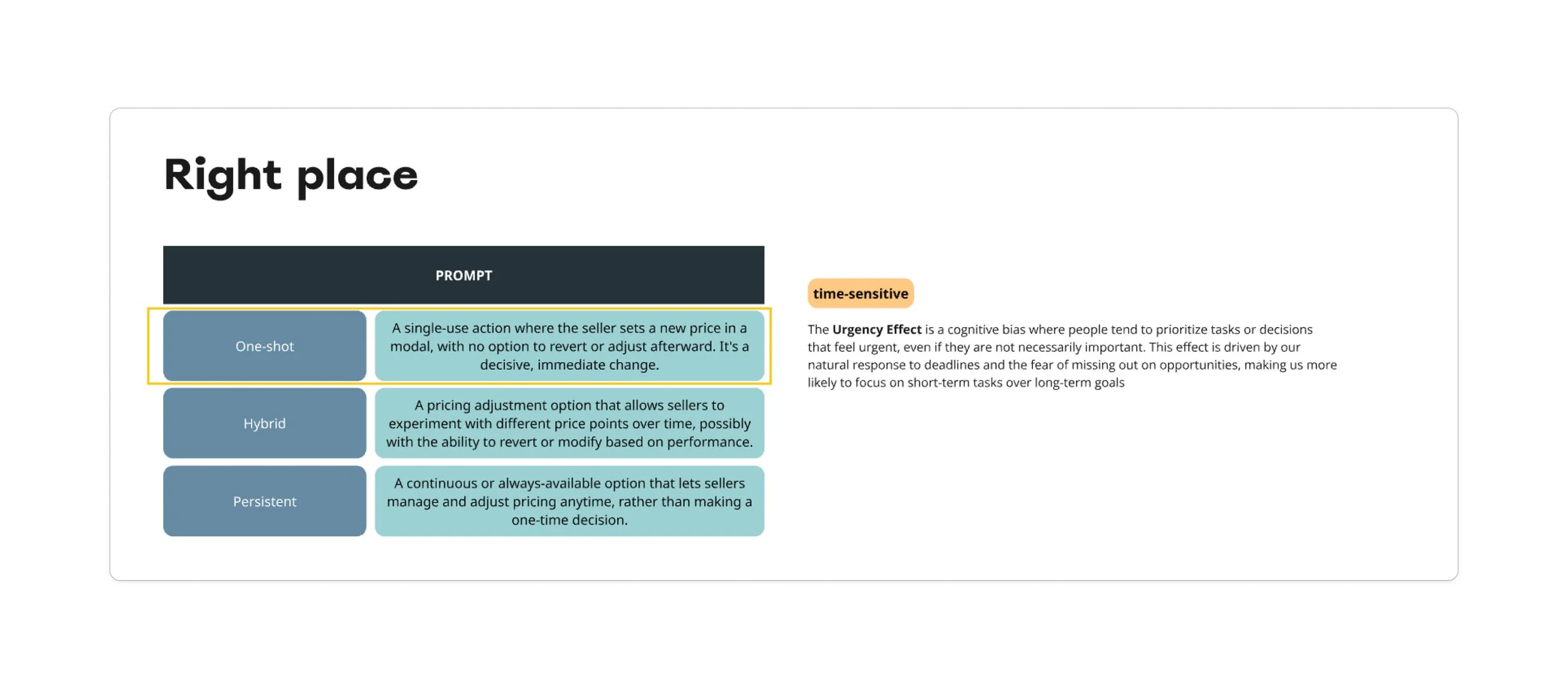
Right place: the initiative will be a one-time action to leverage the urgency effect. A push notification will direct the seller to a price adjustment screen, after which they return to the item detail page to confirm the updated price.
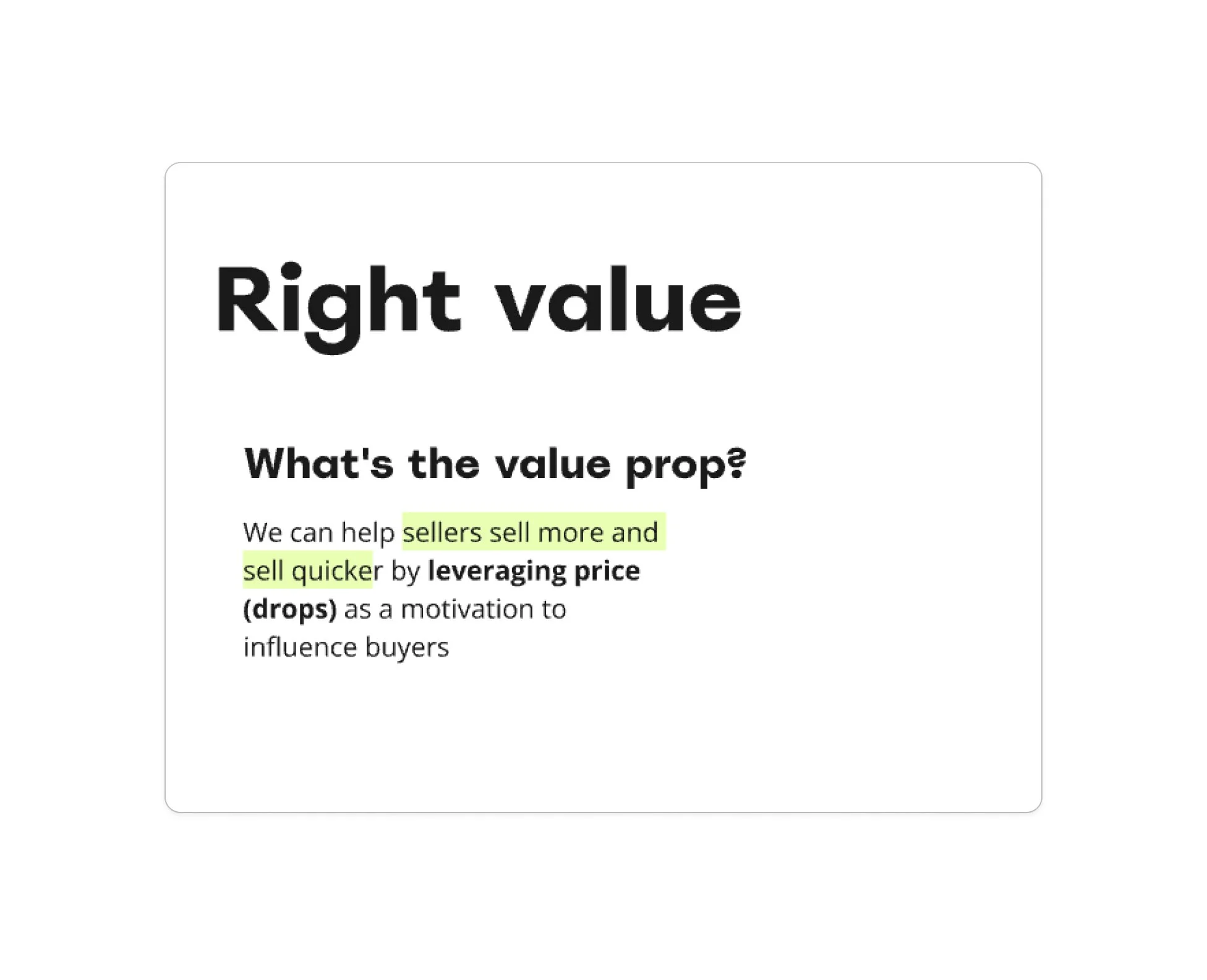
Right value: we aim to communicate that this feature helps sellers sell more efficiently and faster by leveraging price adjustments, providing clear value to both buyers and sellers.
05 Design
Push notification
Social proof – making the seller perceive their item as desirable and increasing their confidence that a price drop will lead to a sale.
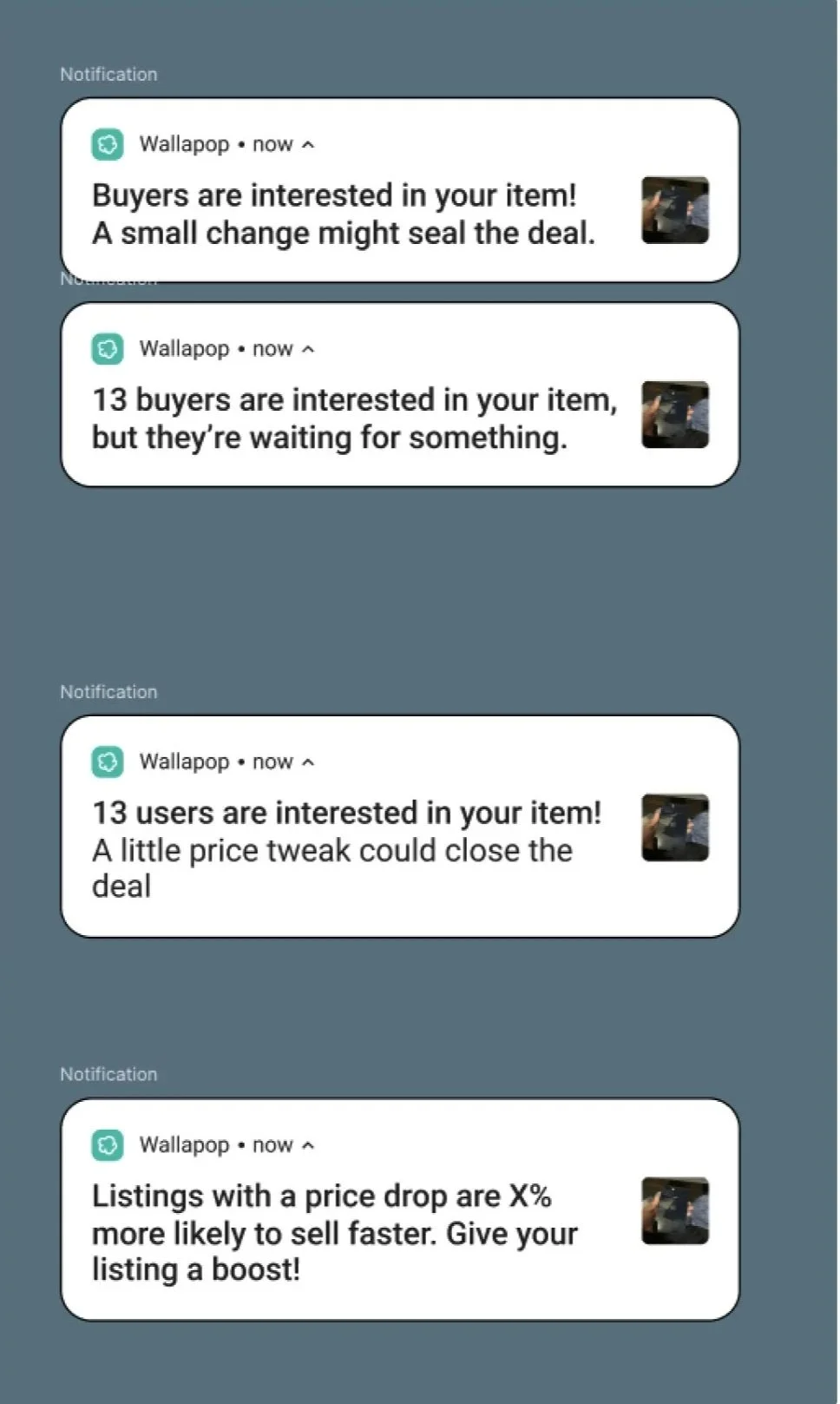
Send a trigger that sparks curiosity without revealing the value prop
This push notification anchors the user's decision in objective evidence, making them more likely to act on the recommendation.
Price adjustor screen
By showing likes&visits, we will reinforce again the sense of desirability and urgency
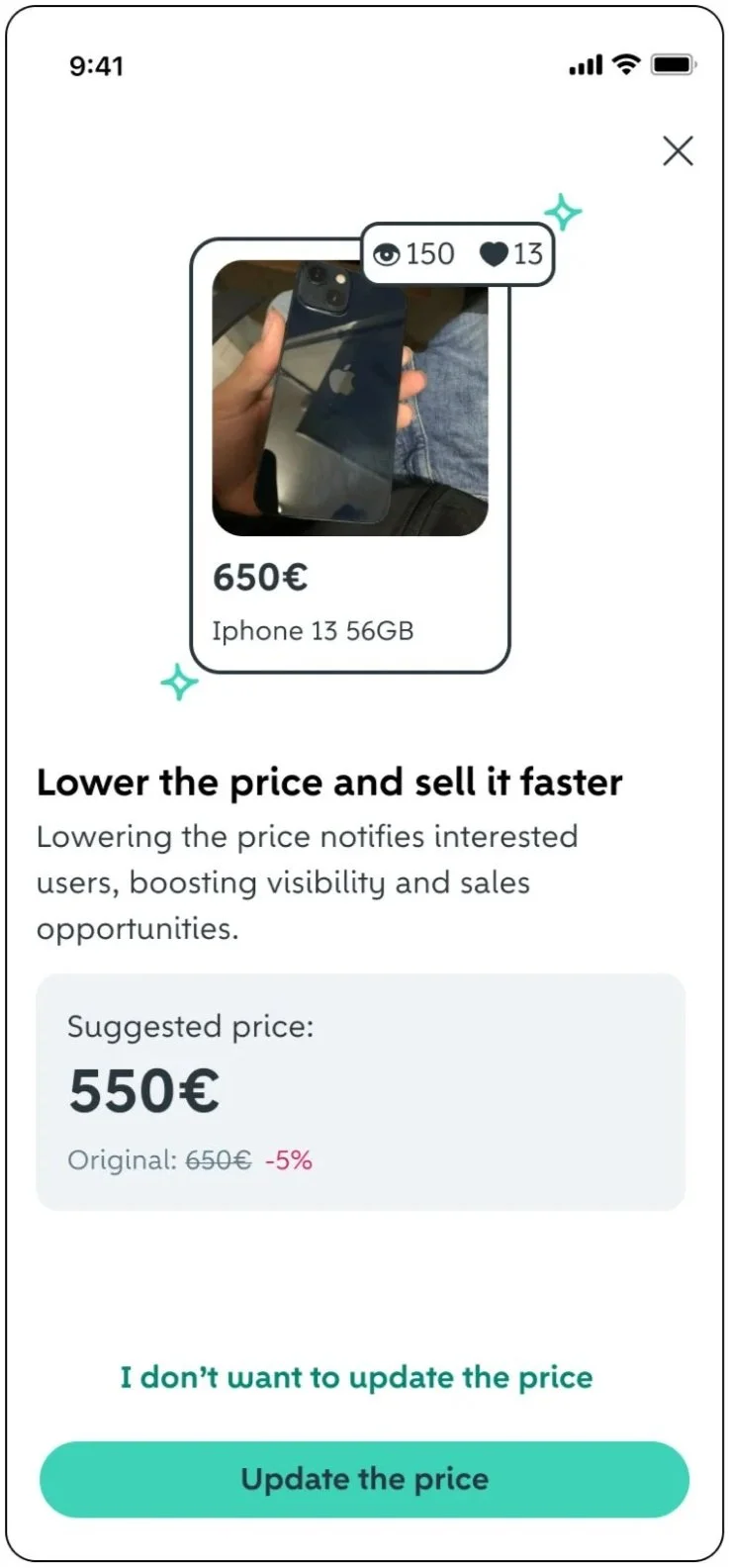
Title explaining the value prop
Default option to mitigate decision fatigue
✨ From benchmark we observed a more functional/transactional tone in this kind of screens – here I wanted to be more fresh and playful (a tone more aligned with wallapop)
06 Go-to-market
Launch an A/B test
07 Results
Successful transactions per lister who adjusted price in treatmen vs control group +95,6%.
Conversion from exposure to price adjustment accepted 14,18%
Overall transactions per lister in treatment vs control +0,57%
We validated our hypothesis that when sellers reduce their price by 10% and triggers alerts to buyers, the number of successful transactions almost doubled (+95,6%).
But, the impact of this feature is only as much as the number of sellers who accept the price drop (14%). So, as next steps we will need to optimize this adoption rate.
More projects
-
![]()
UX strategy · UX vision · User Research · Visual
-
![]()
Growth · Behavioural design
-
![]()
Product strategy and WOW’s